Away from the Crowds, Alone with the Sound of the Waves: 10 Hidden Beaches in Europe
Picture that moment when you landed on the beach in mid-August: It's not even 11 o'clock yet, but there is no place to throw a towel, umbrellas are crowded together, it is impossible to hear the sound of the waves over the roar... Unfortunately, this is the fate of popular beaches that can be reached in two steps by parking the car. Sometimes one feels like escaping to a somewhat isolated and very calm shore, where one can only hear the sound of the sea and the wind.
DiscoverCars.com started with this exact feeling; He has compiled the lesser-known beaches of Europe, hidden behind paths, sometimes only reachable by cable car, or hidden behind cliffs. These stops, two of which are from Portugal, extend to Spain, Croatia, Italy, Malta, Albania, Greece and Cyprus; It offers great alternatives for those who want to get away from the crowd and take a deep breath.
1. Let's Start at Home: Portugal
Praia da Mata (Costa da Caparica)
It is a great chance to find such a large area only half an hour away from Lisbon. Located in the south of the Caparica coastline, Praia da Mata (aka Piedense) stands out completely from the crowd in the center. You reach it by passing through a long dirt road. In the background are the fossil rocks of Caparica, and in front of you are the sand dunes that stretch as far as they can. The Blue Flag beach has basic services such as a restaurant and a lifeguard, but the beach is so wide that you only need to walk a few steps to spread your towel and create your own space. On the north side it is still possible to see traditional fishing nets and restored old huts.
Garajau Beach (Caniço, Madeira)
It is located in the south of Madeira, right at the foot of a huge hillside where the 1927 Statue of Christ is located. This is not a fine sandy beach; A crystal clear sea covered with pebbles. It is a diving and snorkeling paradise as it is part of the Garajau Nature Reserve, which was declared Portugal's first marine protected area in 1986. Underwater visibility is amazing, so be sure to bring goggles and a pair of water shoes for the pebbles. To get down to the beach, you either take a scenic cable car ride or walk down the steep path.
2. Spain: Balearic and Canary Islands
Cala Banyalbufar (Mallorca)
It is a bay hidden among the UNESCO-protected Serra de Tramuntana mountain range, in the northwest of Mallorca. You leave Banyalbufar village and reach it with a pleasant walk of about 15 minutes and a steep descent. This small pebbly bay surrounded by rocks is completely isolated from the island's busy tourist crowd, as it is a little away from the main roads.
Playa de la Solapa (Fuerteventura)
Solapa, whose name means "secret" or "hidden" in Spanish, truly lives up to its name. Located in the west of Fuerteventura, its dark sands are surrounded by volcanic rock formations and are approximately 400 meters long. There are no facilities on the beach, which is reached via a dirt road; That's why you need to bring your water and snacks with you. Currents and waves can be quite strong, so it's best to be careful when swimming.
3. Central Mediterranean: Adriatic and Tyrrhenian Coasts
Beritnica (Pag Island, Croatia)
It's almost like a science fiction movie set. Pag Island's structure, devoid of vegetation and covered with snow-white limestone, has earned it the nickname "Moon Island". It is not possible to go to Beritnica directly by car; You need to take a 15-20 minute walk over the rocks from Ručica, the nearest beach. Three huge rocks rising from the sea right in front of the pebbly beach and the vertical climbing tower Stogaj at the back make you feel nature in its most naked form. There are no facilities, just you and silence.
Monti Russu (Sardinia, Italy)
Monti Russu, which takes its name from the pink granite cape that protects the shore, is an approximately 300-meter bay stuck between round pink rocks shaped by wind and waves. Since it is in a protected area, there is no construction around it. You reach it by walking on a path passing through the Mediterranean maquis. On completely clear days, you can even see the island of Corsica on the opposite shore.
Ramla Bay (Gozo, Malta)
Ramla Bay, which means "red beach" in Gozo's local language, is famous for its orange-red sand, named after the iron mineral in the soil. Since it is located in a nature conservation area, it is protected from construction. The bay with the mythological Calypso Cave on its slopes; With its calm, clear sea and green hills behind it, it is an extremely peaceful spot for both swimming and relaxing.
4. Wild South of the Mediterranean
Gjipe (Albania)
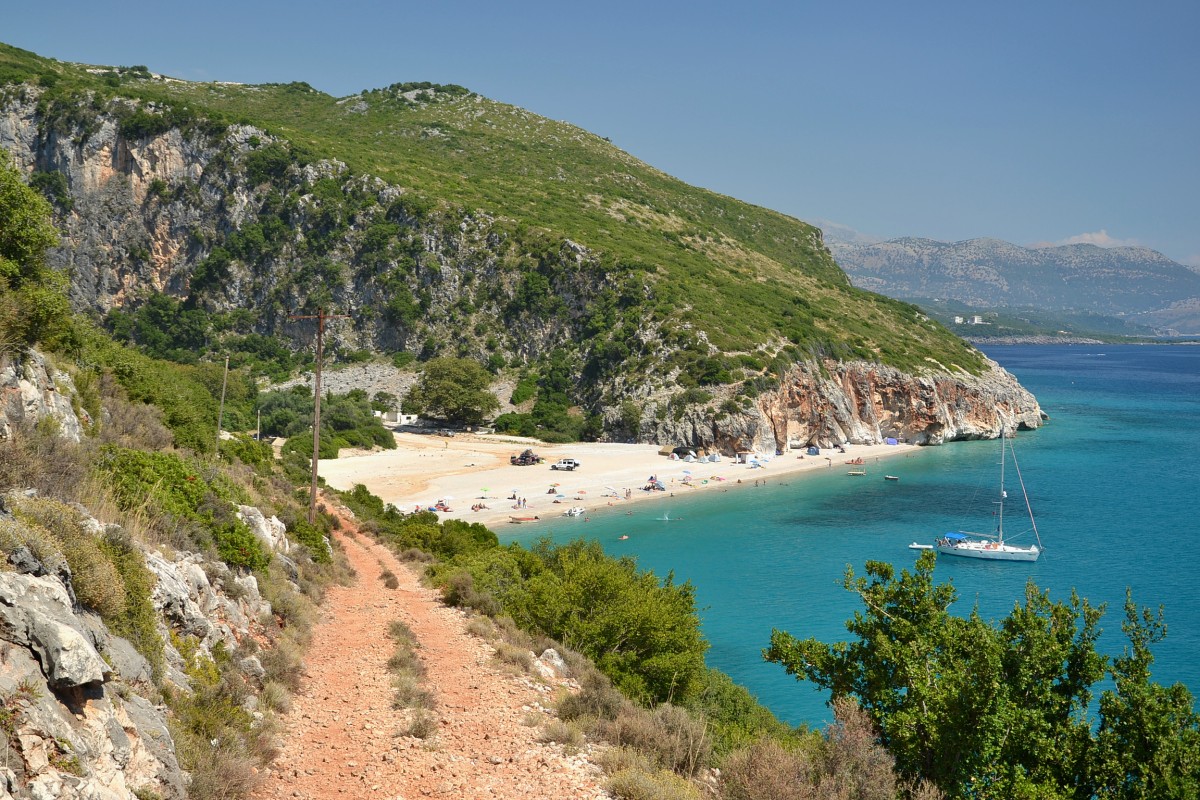
It is a place that reflects the untouched state of the Albanian Riviera before it met mass tourism. It is located between the villages of Dhërmi and Himarë, at the point where a deep canyon opens to the sea. You can go down to the bay, which has deep turquoise waters, either by small boats departing from neighboring beaches or by walking along the path for 30-40 minutes. There are no major resorts or hotels around; The limestone walls of the canyon offer a unique atmosphere for nature lovers.
Cape Possidi (Halkidiki, Greece)
A tongue of sand at the far end of Halkidiki's Kassandra branch, tapering towards the Aegean Sea. The most interesting feature of this place is that it has two different seas: While one side is calm and deep as a sheet, the other side can be wavy and shallow. Since there are no businesses around, you need to bring your umbrella, water and food with you. If you stay until the evening hours, a fascinating sunset view awaits you.
Golden Beach (Karpaz Peninsula, Cyprus)
Golden Beach, stretching at the farthest point of the Karpaz Peninsula, feels like the end of the map. Fine golden sands stretching for kilometers, dunes in the background and an endless horizon... It is very natural to come across wild donkeys, which have become the symbol of the peninsula, along the way. Since it is also a nesting area for sea turtles, it is under protection and no commercial construction is allowed. It is one of the rare places where you can take everything you need with you and be completely alone with nature.
Source: Catarina Beato / Idealista, DiscoverCars.com
Image Source: Wikimedia Commons
Visit the original source to read full details.
Go to Source ↗