Why Is Buying a House in Portugal a Dream? Even 400 Unit Budgets Are Disabled
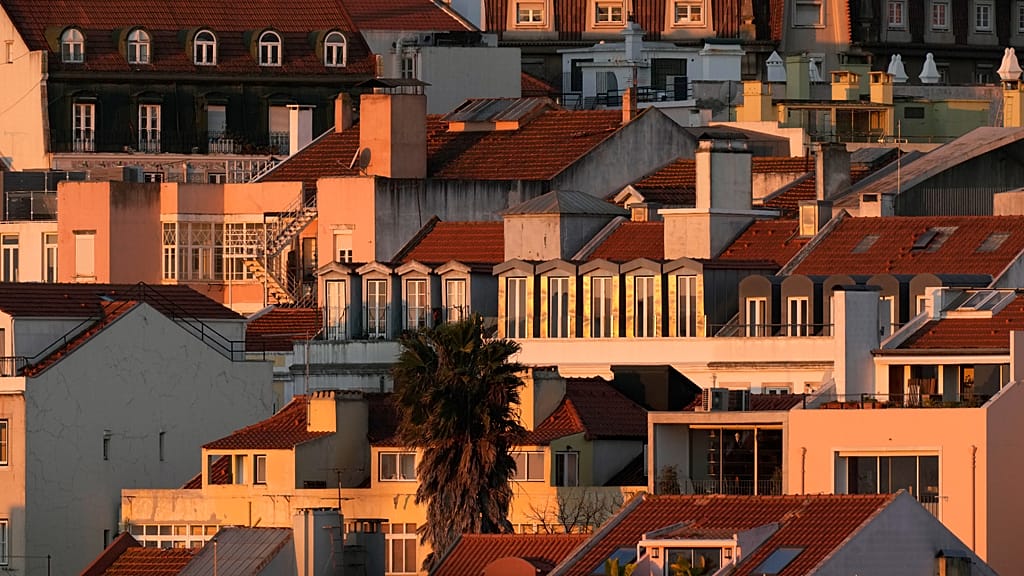
The latest figures are starting to get really annoying for those who dream of buying a house in Portugal or follow the market here from afar.
While browsing real estate websites or looking at a real estate agent's window on the street, one inevitably notices: Prices have skyrocketed. Even 400 thousand euros, which we used to call "good money", now limits your options incredibly in Lisbon and its surroundings, and often even closes the doors in your face. When we look at Imovirtual's May 2026 data, the average house sales price across the country is 430,500 €. This is average; It covers all houses, from new to old, but the truth is that the reality on the street is much harsher for most of us.
So how did things get to this point? There are a few basic reasons that we see and experience in the field.
The Market Is Locked: No Houses For Sale!
The essence of the matter actually lies in a very simple supply-demand imbalance. No new homes enter the market, and those that do enter do so at exorbitant prices. Patrícia Barão, President of the Association of Real Estate Agents (APEMIP), summarizes the situation exactly like this: "There is no new housing inflow, but the demand is terrible dynamic."
When land costs, construction costs, labor, exorbitant taxes and permit processes are added to this, it becomes impossible for young people or ordinary families to own a house.
Government Support Pushed Prices Even Higher
There is an interesting and yet painful situation: The state announced a support package that provides 85%-100% financing and 15% state guarantee for young people between the ages of 18-35. Although this system, which is valid for houses worth up to 450 thousand euros, started with good intentions, it had the opposite effect on the market.
As Ricardo Vagarinho, CEO of the construction company MomentVM, stated; When the sellers saw that young people could access this resource, they made the 450 thousand euro limit a new "base price". In other words, while trying to increase purchasing power, house prices were generally pushed up. As a matter of fact, the IMF recommended that this public assurance be suspended in its June 2026 report, saying that it further distorts the market. This is what happens when you increase the number of buyers while the number of homes on the market remains the same.
Blood Loss in the Construction Industry: It is Impossible to Find a Master
It's not just about not having a house; There is no person to build that house. The market is officially in a "master" crisis. Bricklayer, electrician, plumber, moulder... There is a huge labor shortage in the sector.
During Portugal's previous crisis, when major infrastructure projects were stopped and loans were cut, construction companies went bankrupt one by one and the trained workforce fled abroad. It is not possible to close that gap today. It is estimated that there is a shortage of approximately 80 thousand employees in the construction industry. In this case, companies that want to hire masters offer higher daily wages, and this is directly reflected in the construction cost.
Moreover, this limited workforce; It also has to compete with large state projects such as new airports, railways and highways. Even though a "green corridor" was opened to migrant workers for emergency repairs after the storm disasters in the center of the country, the fire in the market has not been extinguished.
Cement, Copper, Glass: Material Prices Are Soaring
Material inflation continues to weigh us down. According to INE (National Institute of Statistics) data, construction material costs have increased by 3.7% annually. In particular, glass, copper cables, concrete slabs and ceramic blocks take the lead. As Ricardo Vagarinho said, "It all depends on energy." As fuel and energy prices increase, the cost of every material entering the construction site increases.
The Biggest Hidden Cost: Bureaucratic Waits
One of the factors that surprised me the most and locked the market is the land and license processes. Sometimes it takes 1-2 years to buy a plot of land and obtain planning permission from the municipality.
Millions of euros invested by the investor for the land sit idle for those 2 years without providing any return. If you consider that the money costs at least 6% annually, the investor eventually bears the bill for this waiting period on the sales price of the house. In other words, bureaucracy is taken directly from our pockets.
The Table Changes Depending on Where You Want to Live
Prices in Portugal show an incredible gap depending on geography. According to March 2026 reports, the situation in square meter prices is as follows:
Lisbon: At the top with €5,796 per square metre.
Faro (Algarve): €4,804 per square meter.
Madeira & Setúbal: Around €4,000.
Interior Regions (Guarda, Bragança, Castelo Branco): Prices per square meter are below €1,000.
Although prices seem much more reasonable in the inner regions, cheap houses alone are not enough to offer people a living option there. Transportation networks, schools, markets and social facilities are needed to facilitate commuting to work. Otherwise, everyone continues to be stuck in centers like Lisbon.
What to Do?
It seems there is no magic bullet. As APEMIP President Barão said, in the first place, empty buildings in cities need to be quickly renovated and brought to the market with public-private partnerships. Municipalities must speed up their licensing processes and find a solution to the workforce crisis in construction.
Otherwise, as long as these costs and this bureaucracy continue, finding a decent house to put our heads under, even with figures such as € 400,000, will continue to be a dream.
Visit the original source to read full details.
Go to Source ↗