Its headline was: “Bottle and can return system accelerated in Portugal: 305 million packages returned in five months
Bottle and can return system accelerated in Portugal: 305 million packages returned in five months
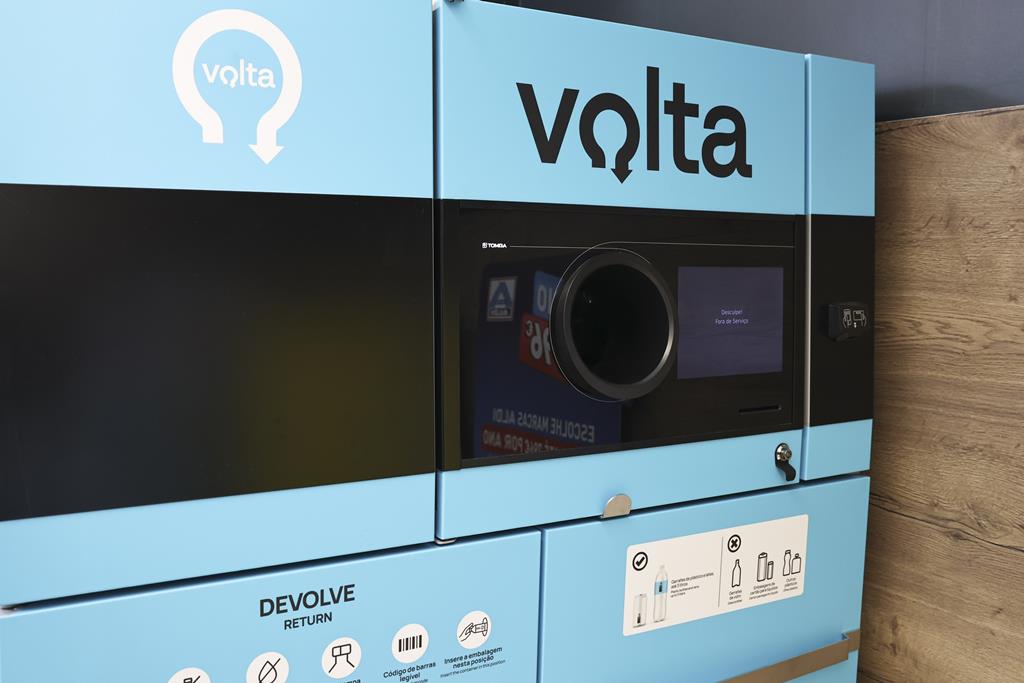
Volta, the deposit refund system for beverage packaging in Portugal that started on April 10, collected more than 305 million plastic bottles and metal cans in its first five months.
The usage rate of the system has increased significantly in recent months. Volta, which passed the 10 million mark in the first two months, reached 100 million in July. At the end of the fifth month, the total number increased to 305 million.
Today, approximately 5 million packages are returned to the system per day throughout Portugal.
This means more than 3,400 packages per minute or approximately 57 packages per second.
How does the system work?
Volta is the consumer face of Portugal's Sistema de Depósito e Reembolso (SDR) system.
When purchasing disposable beverage packaging included in the system, the consumer pays a deposit of 0.10 euros in addition to the product price.
This 10 cents is refunded when the appropriate packaging is later returned to the Volta collection point.
Therefore, the system is different from a classic recycle bin.
When the consumer returns the packaging, he/she gets back the deposit he/she previously paid.
What bottles and cans are accepted?
The system does not cover all packages.
Volta generally includes disposable beverage packages of up to three liters.
These are suitable bottles and cans made of plastic, aluminum or steel.
The presence of the Volta symbol and its barcode on the packaging It must be readable by the system.
Therefore, putting an old or non-included beverage package into the machine does not mean that you will be charged 10 cents.
Do not crush the bottle
One of the most important mistakes consumers make is crushing the packaging for recycling.
In Volta, the packaging:
It must be empty, not crushed, have its cover on and the barcode must be readable.
This is because automatic machines verify whether the packaging is included in the system or not, based on its shape and barcode.
Therefore, those who are used to crushing plastic bottles at home to save space should not do this for the bottles they will take to Volta.
There are more than 3 thousand collection points
According to SDR Portugal, the Volta network has now reached more than 3 thousand points across the country.
A significant portion of these are automatic return machines located in supermarkets and hypermarkets.
There are also manual picking solutions for smaller stores, minimarkets and neighborhood supermarkets.
Thus, the system does not only work through large shopping chains.
Separate kiosks for those with many bottles
Separate Volta kiosks are also being installed to make it easier for those who have accumulated a large number of packages in their homes or businesses to hand them over to standard machines one by one.
According to SDR Portugal data, currently:
In Albufeira, Barcelos, Cascais, Funchal, Ponta Delgada, Portimão and Vila Nova de Famalicão
seven kiosks are operating.
In addition Almada, Aveiro, Five new kiosk installations are under contract for Mafra, Oeiras and Vila do Conde.
The long-term goal is 50 kiosks across the country.
Why has usage accelerated so much compared to the first months?
When Volta started on April 10, it took time for the system to become widespread.
While a total of 10 million packages were returned in the first two months, the 100 million limit was crossed a little over the third month.
Reaching 305 million in the fifth month means that the number of refunds has approximately tripled in the last two months.
The proliferation of collection points is as effective as consumers' getting used to the system.
If the current rate of approximately 5 million per day is maintained, it is possible for the system to reach the capacity to collect billions of packages back on an annual scale.
However, it is too early to give an exact annual figure, assuming that the five-month pace will remain the same throughout the year.
Is 10 cents really a refund?
Yes, but this is not a government grant or free reward.
The consumer already pays a 10 cent deposit when purchasing the beverage.
When he returns the packaging properly, he gets his deposit back.
If the packaging is thrown into the garbage or normal recycling bin, the deposit is not refunded.
This economic mechanism is used to encourage consumers to collect packaging separately.
Are the regular yellow recycling bins going away?
No.
The start of Volta does not mean the end of the normal packaging recycling system in Portugal.
Included in the system Non-plastic and metal packaging continues to be separated through the existing recycling infrastructure.
Volta is especially aimed at disposable beverage packaging registered in the deposit system.
Therefore, it is easiest for the consumer to check the Volta sign on the packaging.
What does 305 million indicate?
The first five-month figures show that the system is rapidly entering consumer habits in Portugal.
The real measure of success will not only be how many bottles are fed into the machines.
In the long term, what will be more important will be how much of the suitable packaging released onto the market is collected back, how much of the material goes into high-quality recycling, and to what extent the system contributes to the European Union collection targets.
However, the first five-month course, from 10 million packages to 305 million, shows that Volta has passed its most important threshold in the initial period.
Resources
SDR Portugal — 10 September 2026 — Sistema Volta first five-month results
Renascença — September 10, 2026 — “Sistema Volta. 305 milhões de embalagens devolvidas em cinco meses”
Diário de Notícias / Lusa — 10 September 2026 — “Volta recolheu 305 milhões de embalagens nos primeiros cinco meses”
Visit the original source to read full details.
Go to Source ↗